Prediction: Acoustic Display will end up on the HomeView.
New iPad mini with… WAAAAAAAT?
It’s the first iPad mini with real water resistance, which Apple chalks up to a new feature called the Acoustic Display, in which audio is being channeled through the display surface rather than more porous speakers.
Holy batman. Well, we just got flying cars recently too…
Ready Time 3.13: Done Early, Running Late
The plan was to head out the door on time. And then… you decided to take a long shower in the morning. The kid ended up moving a lot faster than normal to get dressed (ha! when does that ever happen?). Maybe the morning ritual of doing some stretches needed to get skipped for today.
Ready Time has always counted back from your Deadline, but real life doesn’t always stick to the Plan. Now, when you finish a Step early, you can tap Done. The next Step starts right away, and the time you saved becomes spare time before the Deadline. Running late? Tap the current Step to give it 5 more minutes, and Ready Time shows if you’re behind and when you’ll really finish. Short on time? You can skip an upcoming Step for just this run.

You can mark a Step done or add 5 minutes by long-pressing a push notification, or ask Siri: “Mark my Step done in Ready Time” or “Add 5 minutes to my Step in Ready Time”. All of it works without needing to open the app.
You can download Ready Time on the App Store. If you have feedback, we’d love to hear from you. Drop me a note.
Kid: Where are you? Can you check on your map?
Old geezer: Yeah, I can see where I am.
Kid: Where?
Old geezer: Where the blue dot is.
Kid: …
Heard this today: company’s procurement software disappeared (they shut down?) so junior software dev on Procurement Team vibe codes their own version of the procurement software.
Things to know when you get cancer. And FCCT. Parking this here for future reference for myself.
Halloween in Cantonese
Here are some Halloween words in Cantonese.
| English | Cantonese | Jyutping | |
|---|---|---|---|
| 🎃 | Pumpkin | 南瓜 | naam4 gwaa1 |
| 🌾 | Pumpkin patch | 南瓜園 | naam4 gwaa1 jyun4 |
| 🦇 | Halloween | 萬聖節 | maan6 sing3 zit3 |
| 🧛 | Costume | 面具 | min6 geoi6 |
| 💀 | Skeleton | 骷髏骨 | fu1 lou4 gwat1 |
| 👻 | Ghost | 鬼 | gwai2 |
| 🕷️ | Spider | 蜘蛛 | zi1 zyu1 |
NetNewsWire on how they added iPhone Duo support:
How we did it: we didn’t do any work at all. We built the app using Xcode 27.1 and the default iOS SDK that comes with it, and that’s it. […]
There is a good list of reasons to use standard controls in the standard ways, and near the top of that list is to be ready for these kinds of days, so we’re not bogged down for a month or more trying to adapt to big changes like this.
Yep. Those of us who’ve suffered through Apple’s UI and platform transitions over the years have learned how painful it can be if you go your own way too much. Stick to what Apple’s trying to do, and you’ll be in better shape for the next shift. I learned this the hard way with Little Memory, but I’m so glad that I finally got it rewritten with my learnings, so my own iPhone Duo support wasn’t too difficult. There were some UX considerations for the outer vs inner screen layouts to optimize the experience, but they weren’t strictly necessary.
Ready Time 3.12: Siri
Ready Time now works with Siri! Ask “When do I leave in Ready Time?” or “What’s my next step in Ready Time?” and Siri will give her (or its?) chirpy answer without you needing to pick up your phone. Because picking up your phone takes so much work, phew! This makes it easy to use Ready Time with a paired Apple Watch too.
When plans change, say “Change the deadline for Dinner in Ready Time” and give it a new time. Ready Time updates your start times without opening the app. This works on one-time Plans for now.
You can download Ready Time on the App Store. If you have feedback, we’d love to hear from you. Drop me a note.
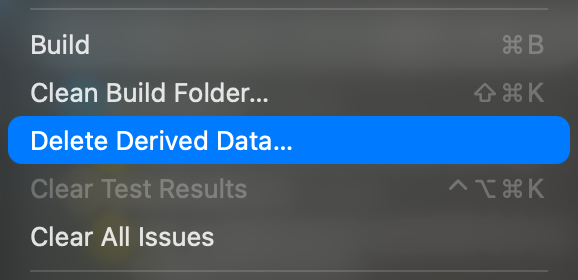
This! Finally, a way to delete Derived Data directly from Xcode! Not sure when this showed up, but it’s in my Xcode 27.1. No more hunting for the path and manually deleting it.
Coinbase is going mobile native too
Looks like Coinbase is also joining the native mobile app party too:
Were taking Coinbase’s consumer trading app fully native, migrating off React Native and rebuilding in Swift and Kotlin! Two things changed the math: AI coding agents have collapsed the cost of building a feature twice, and the end product is simply better when nothing sits between your code and the platform. Faster startup, fewer crashes, day-one access to new iOS and Android capabilities. For an app where millions of people trade real money, that matters a lot.
Re-iterating in bullets:
- nothing sits between your code and the platform
- faster startup
- fewer crashes
- day-one access to new iOS/Android capabilities
Also, the team can focus on more on the user experience rather than battling tooling.
I just re-read my post from yesterday and saw this sentence I wrote:
The HomeView needs an iPhone for it to work with Siri AI because your phone and all its apps are where it gets all its context.
WTF is this weird AI sounding sentence coming out of my fingers? What is happening to my mind? Our language? Our… blah!
Little Memory 2.2: iPad and iPhone Duo
Little Memory 2.2 is out, and it’s been designed to work with wide screens! It’s hot off the tail of Ready Time’s Duo/iPad release.
iPhone Duo
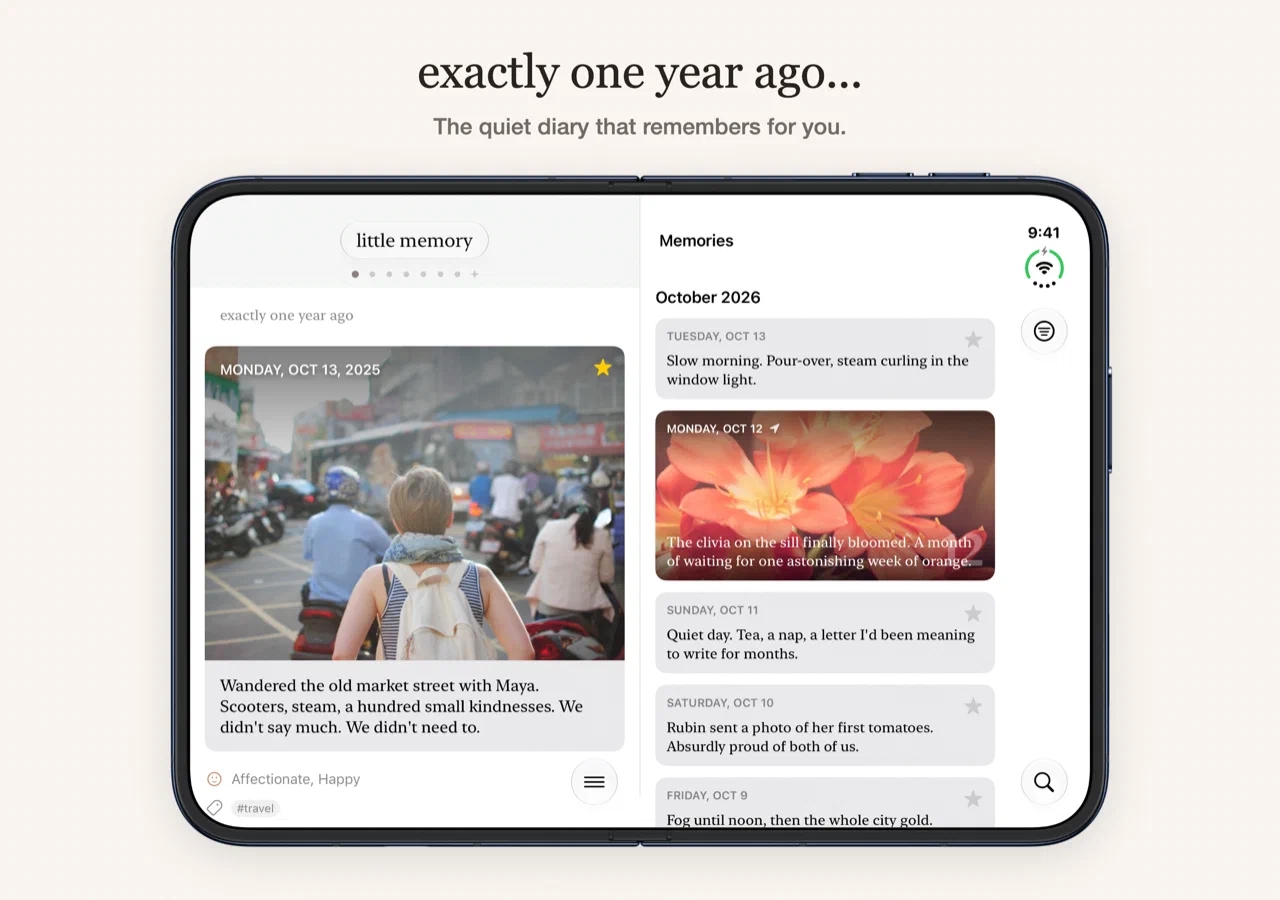
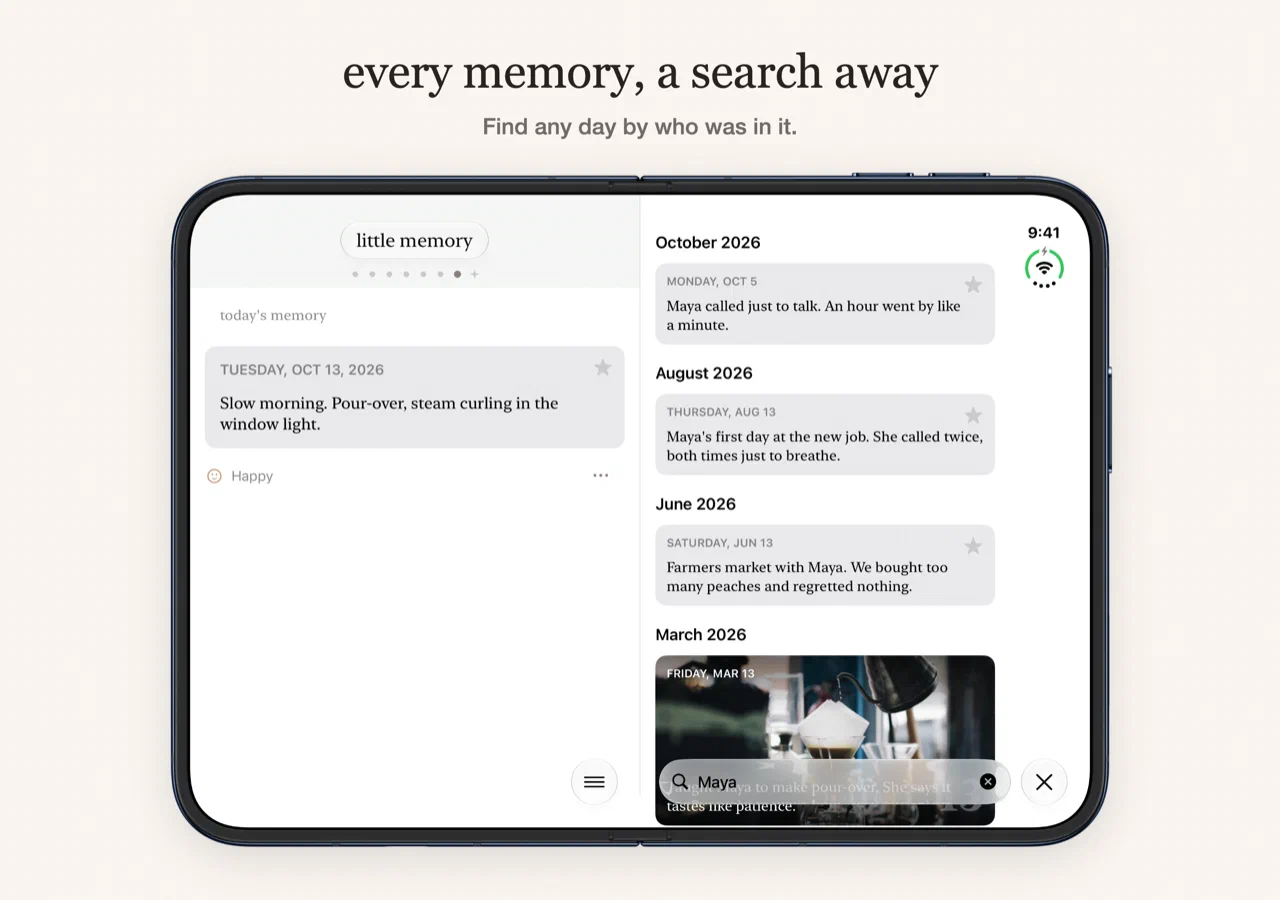
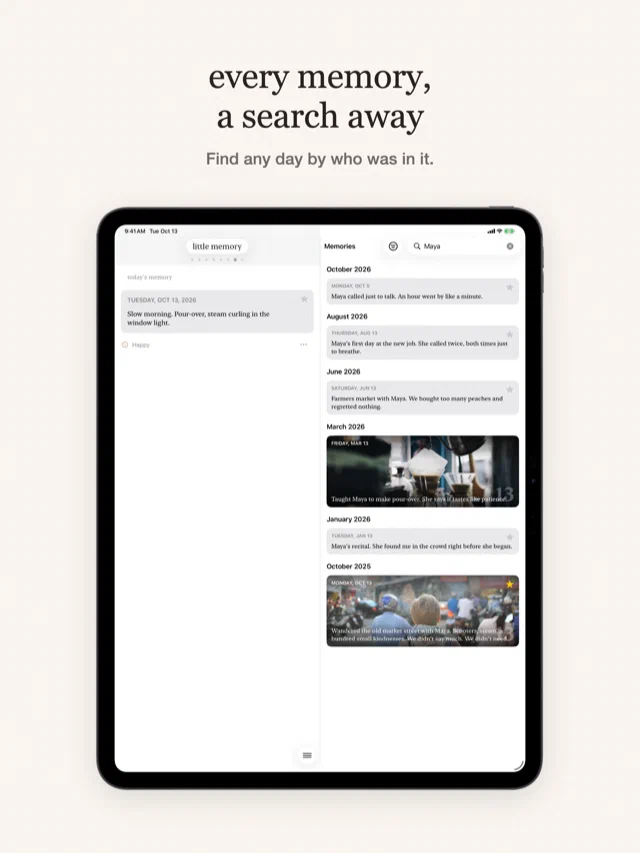
Apple’s fancy new iPhone Duo opens up to a wide screen. I’ve been meaning to revisit iPad support for Little Memory, so I thought I’d take this opportunity to throw 2 rocks and hit a single bird. Open the iPhone Duo: when you select the Search option in the inner display, the Search view will now present on the side beside the main Diary. Tap a search result and the Diary moves to that day. When you close or open the phone, you’ll stay on the day you were looking at.
iPad
The iPad gets a layout of its own with the same Diary and Search side by side. If you’d rather just have the Diary, you can turn Search off from the Diary menu.
Tags on a new memory
Previously, you could only add tags to a memory when editing it. This made it pretty clunky to use, and probably made
it easy for folks to ignore even tagging anything. I like tagging little things like #coffee or more recently, as I’ve been
battling the insects coming into the house: #ants. It can be a fun way to spot trends or patterns in your own days. If you haven’t given it a try in a while, maybe give it a revisit. Tags are a Premium feature.
Fixes
Memory pushes only go out on a real anniversary now. This was a pretty bad bug I mentioned yesterday, where you’d get a random memory on days you didn’t have one. I think it mostly impacted newer users who have a sparser history of memories.
Text you haven’t saved also stays put when you leave the editor, and there are fixes for sync status, iCloud setup and the streak saver.
Onward
If you have feedback, I’d love to hear from you. Drop me a note.
For App Intents and Purposes
I see what you did there, Apple.
The HomeView needs an iPhone for it to work with Siri AI because your phone and all its apps are where it gets all its context. With a multi-user device, it makes sense: how are you going to manage private data of each user on the same device while guaranteeing the data is up-to-date/synced all the time? Requiring the iPhone makes sense. To every app developing an iOS app: it’s time to build out those App Intents.
/software-development #ios-development #ai #apple #personal-ai
Found another Little Memory 2.0/2.1 bug: if you don’t have a memory for a day, you get a random memory pushes instead. That shouldn’t be happening. Fix in 2.2.
Ready Time 3.11: iPhone Duo and iPad
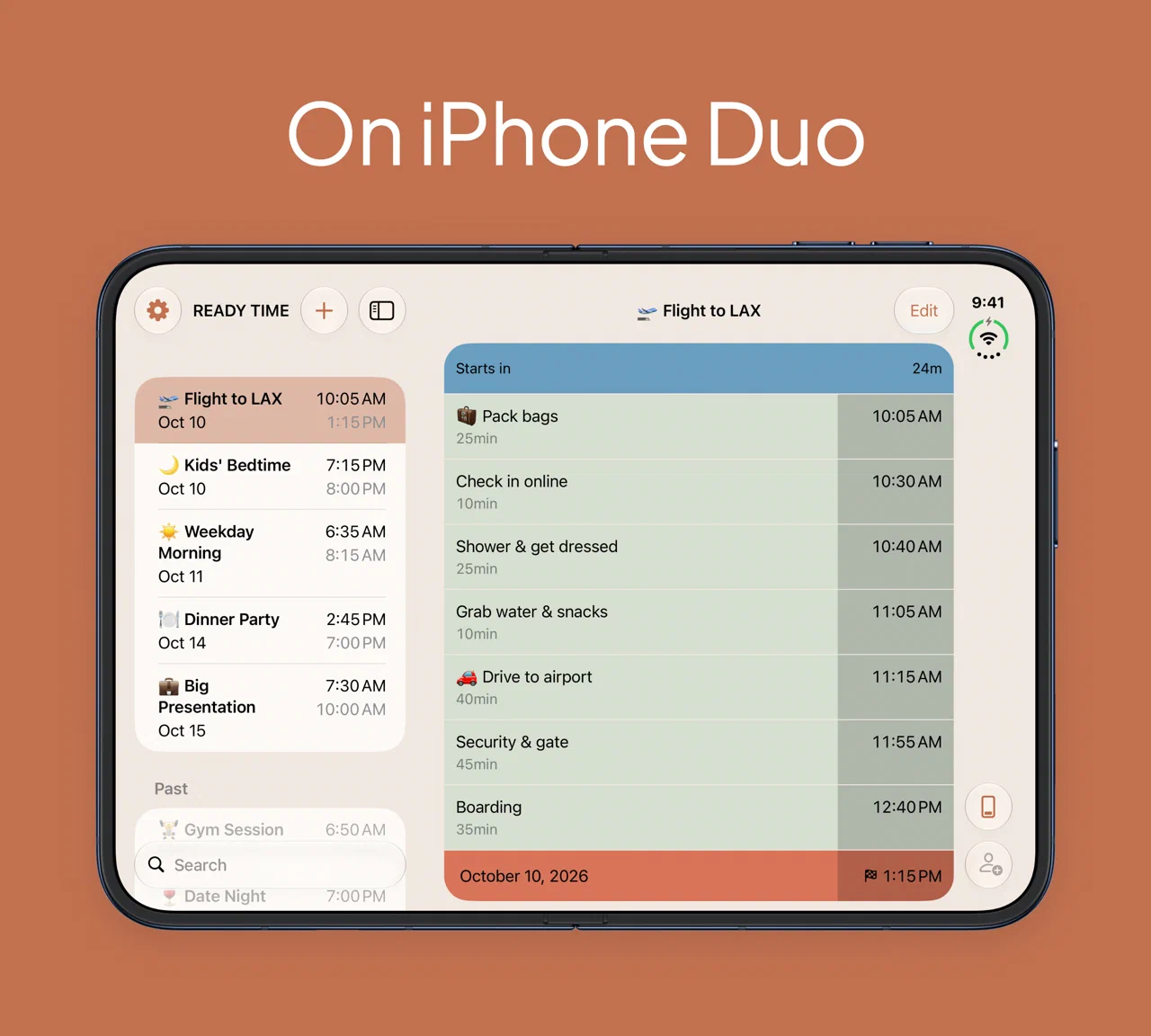
Ready Time has run on iPad for a while, but it was really just a stretched out version of the iPhone app, which was kind of lame. It really didn’t take advantage of the large display on the iPad, and you had to navigate around the app as if you had limited screen space. With iPhone Duo coming out, we wanted to make better use of the bigger screen. Now on iPhone Duo and iPad, your Plans stay in a list on the left while you can see a selected Plan on the right.
Editing on the bigger screen
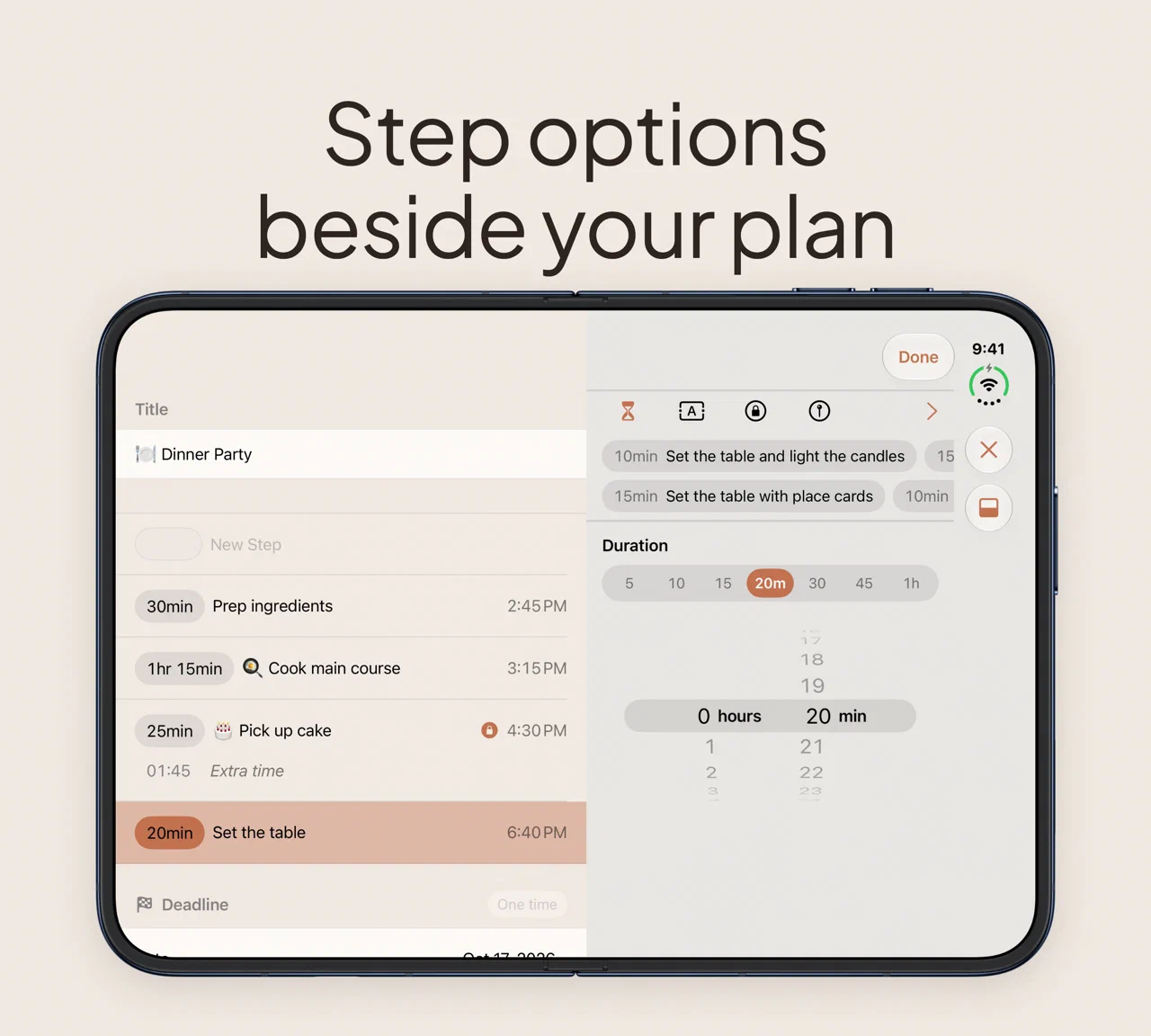
Editing has also been updated to better suit the larger screen. On the iPhone, editing a Step’s duration, time lock, and travel options made sense where the keyboard is displayed. But with the larger screen, we have much more width on the screen to be able to show you these options on the side of the Plan Editor.
Closing iPhone Duo
If you close iPhone Duo, the Plan you had open stays running on the outer display. You can pack the night before with it open, close it on your way out the door, and your notifications and Live Activity keep going.
Spotlight and Shortcuts
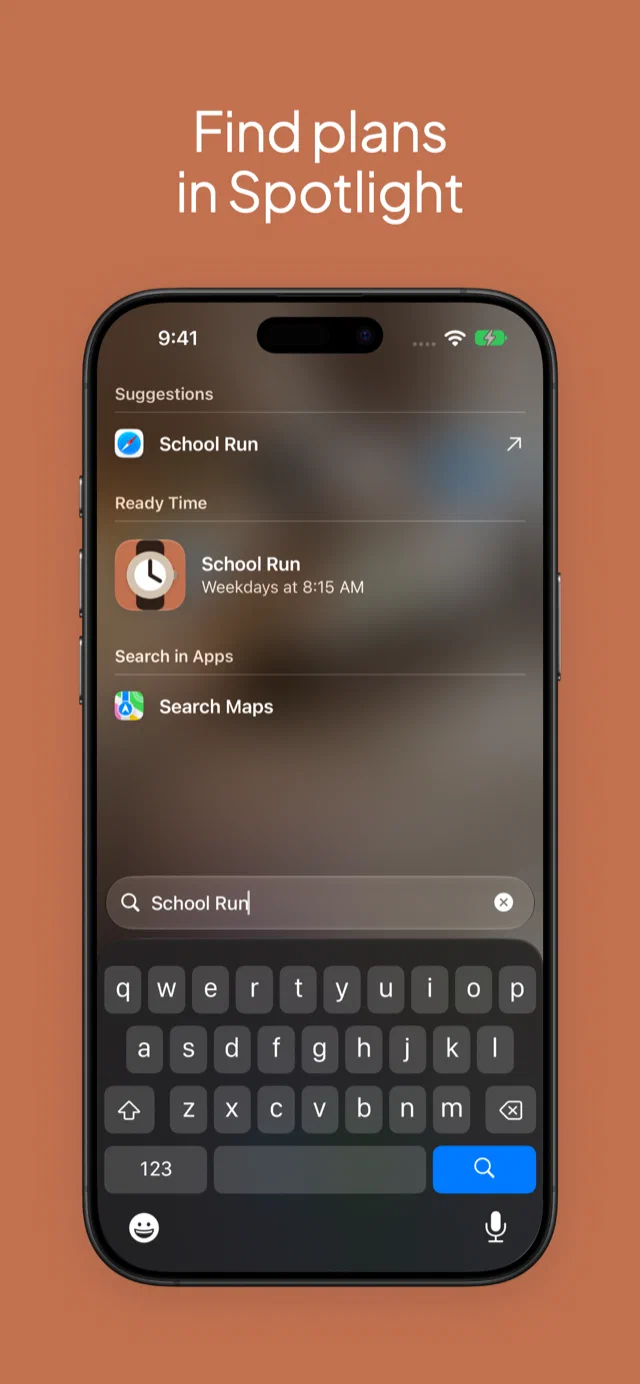
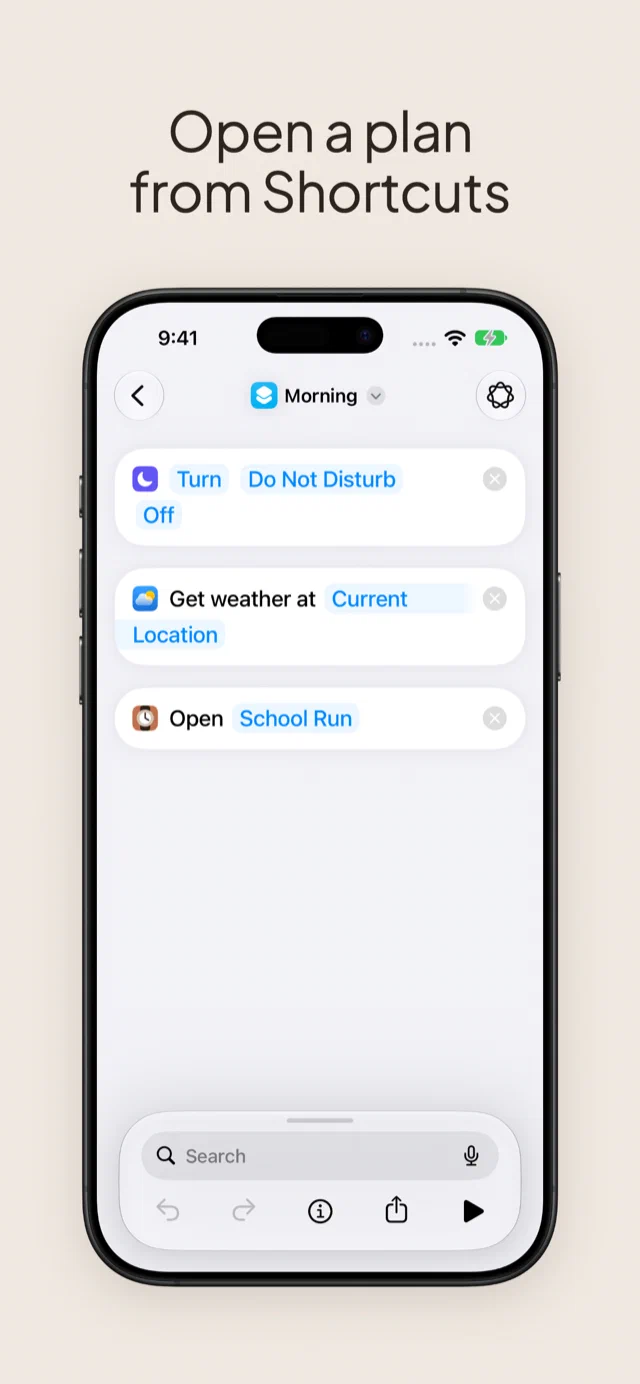
3.10 was also recently released, and with it came support for Spotlight search, and the Shortcuts app has an Open Plan action. You can now search for your Plans in Spotlight so you can quickly get to them without needing to search for the app.
Picking a duration
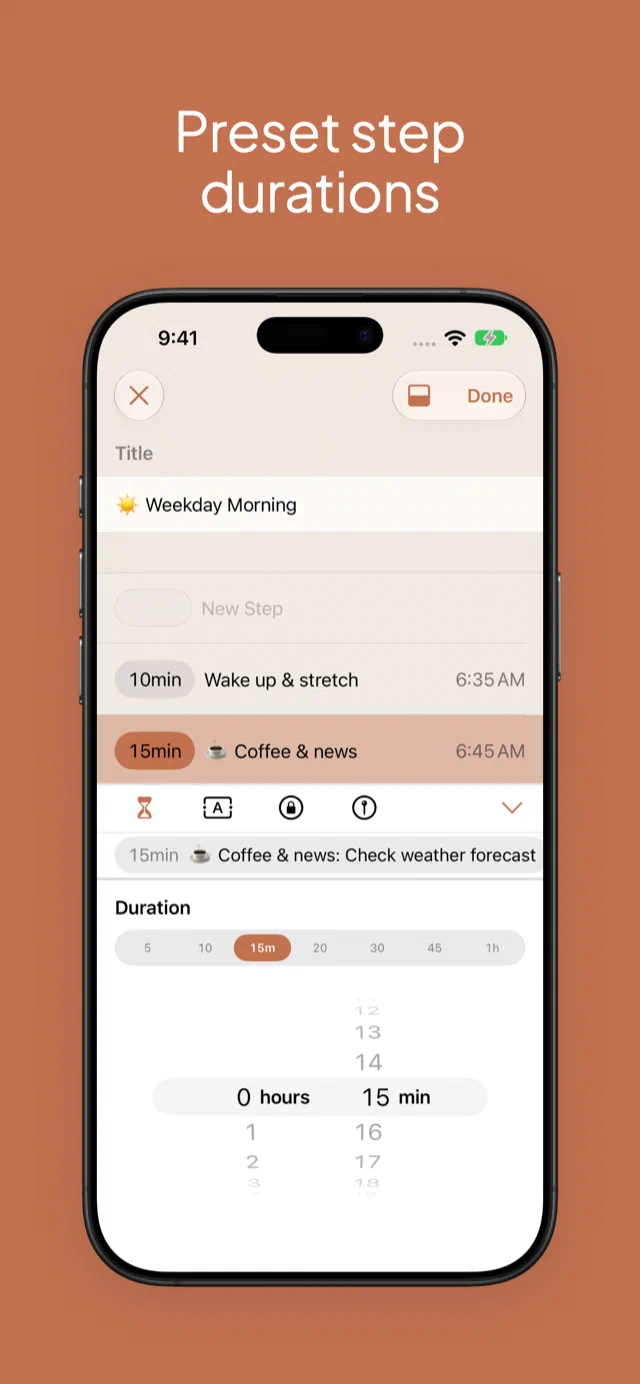
The duration picker for Steps finally got a face lift. We’d been using the standard iOS spinner wheels for selecting durations, but oftentimes, you want to set something preset like 5 minutes, 10 minutes, 15 minutes, etc. Now, you can select one of the common durations right in the picker. This should speed you up when setting up your Plans.
We also made it quicker to start a new Plan from one of the built-in routines, tapping a Live Activity now takes you straight to that Plan, long Step titles wrap onto more lines, and we cleaned up the colors in every theme so Step times are easier to read.
Onward
You can download Ready Time on the App Store.
If you have feedback, we’d love to hear from you. Drop me a note.
Lost & found in Tokyo: a first-timer’s adventure (via):
I felt the city was way more quiet and relaxing than I expected. It was refreshing to be in a place where society puts the needs of others first instead of the general “gotta get mine!” attitude everywhere you look in the US.
I could sense there was a push-pull of how Japanese people felt around social pressure to comply with accepted standards, but I did see streaks of rebellion from time to time and I bet the balance between those two viewpoints is constantly moving back and forth.
I love hearing (thoughtful) first time experiences of folks visiting Japan. It lets me relive my own wonder and discovery that I had before, and touches on my own nostalgia.
Went to a fun party last night:
- bring your own fun hat
- swap your hat with other folks during the party
- live band 8 piece band which included a horn section
- 4 cakes!
- a mix of younger and older crowd
- a church in the hills
- epic view of the bay during sunset
- at one point, whistles were handed out and you could participate with the band: this was like handing out toys to toddlers, folks would not stop whistling randomly 🤪
Cherish the moment
He just smiled and handed me the origami crane (via):
Ten years later, as a high school student, Matsuda found herself thinking about that moment again. […]
“I started to think deeply about that time and tried to remember the details,” she said. “And I thought that maybe while I was on the phone with my grandfather, possibly [the man] wrote something on the paper.”
She hurried home from school and unfolded the crane to check. He had. Inside was a well-known Japanese expression about how every encounter is precious.
Roughly, it means “We should treasure each time we cross paths with someone because it might never happen again.” Or, more simply, “cherish the moment.”
Spoke with a friend recently who said: “I miss how fun the internet used to be.”
It’s still fun, you just have to know where to go. Join us on the indie web!