Confusion is the sweat of learning
Failing grades soar as professors see greater AI usage, dwindling math skills in UC Berkeley computer science classes (via):
35.3% of CS 10 students and 10.6% of CS 61A students received F’s in spring 2026. In spring 2025 and spring 2024, the percentage of F’s did not exceed 10% for either class. The electrical engineering and computer sciences department’s grading guidelines state that 7% of students in lower division courses, including CS 10 and CS 61A, should receive D’s and F’s.
So that’s:
- CS10 F’s: <10% -> 35.3%
- CS61A F’s: <10% -> 10.6%
- Expected D’s and F’s: 7%
Looking at the current numbers in Berkeleytime, there are even newer (and more stark) numbers:
| Semester | CS 10 F rate | CS 61A F rate |
|---|---|---|
| Fall 2024 | 1.3% | 2.7% |
| Spring 2025 | 7.7% | 4.1% |
| Fall 2025 | 3.0% | 2.9% |
| Spring 2026 | 44.4% | 11.3% |
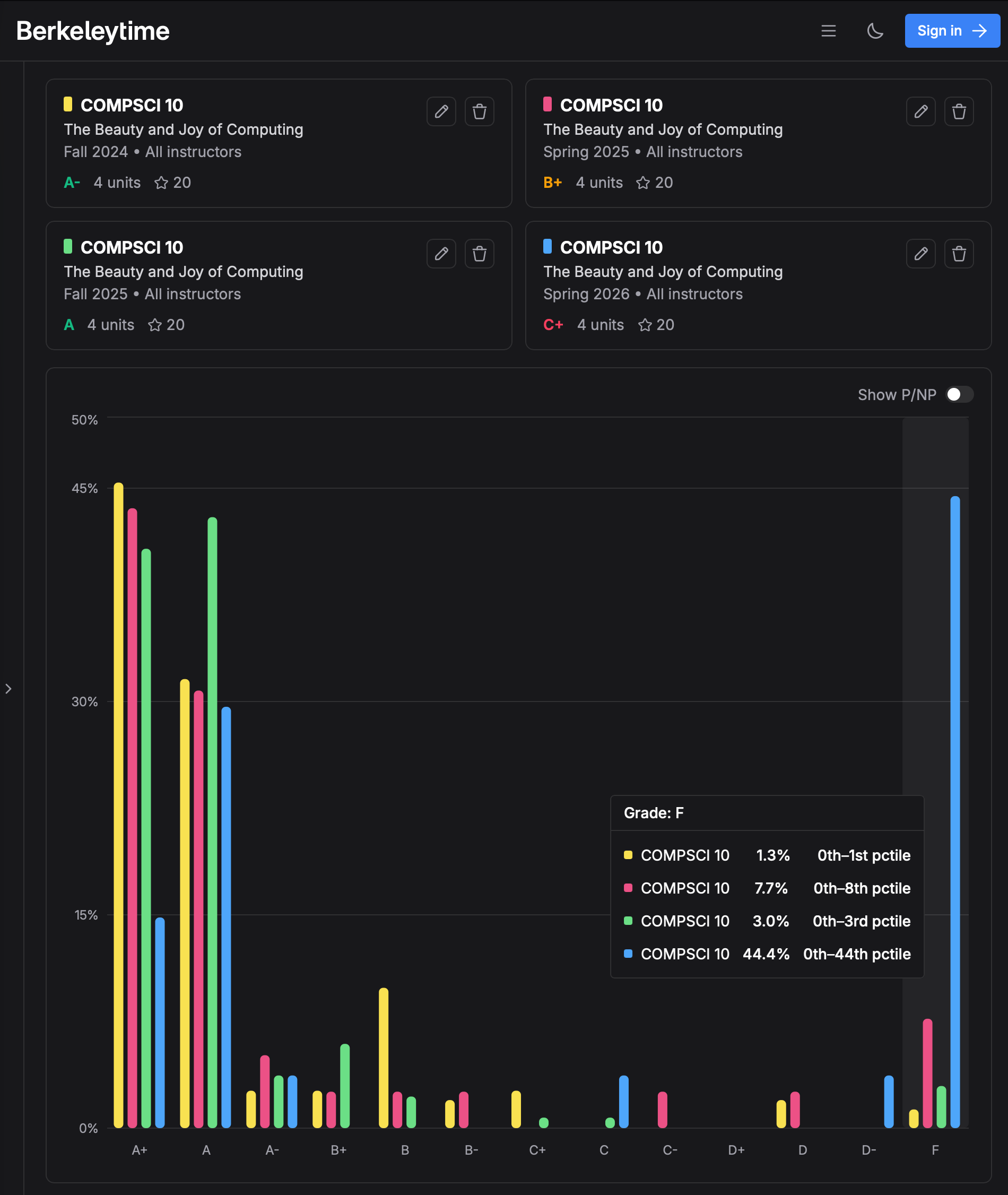
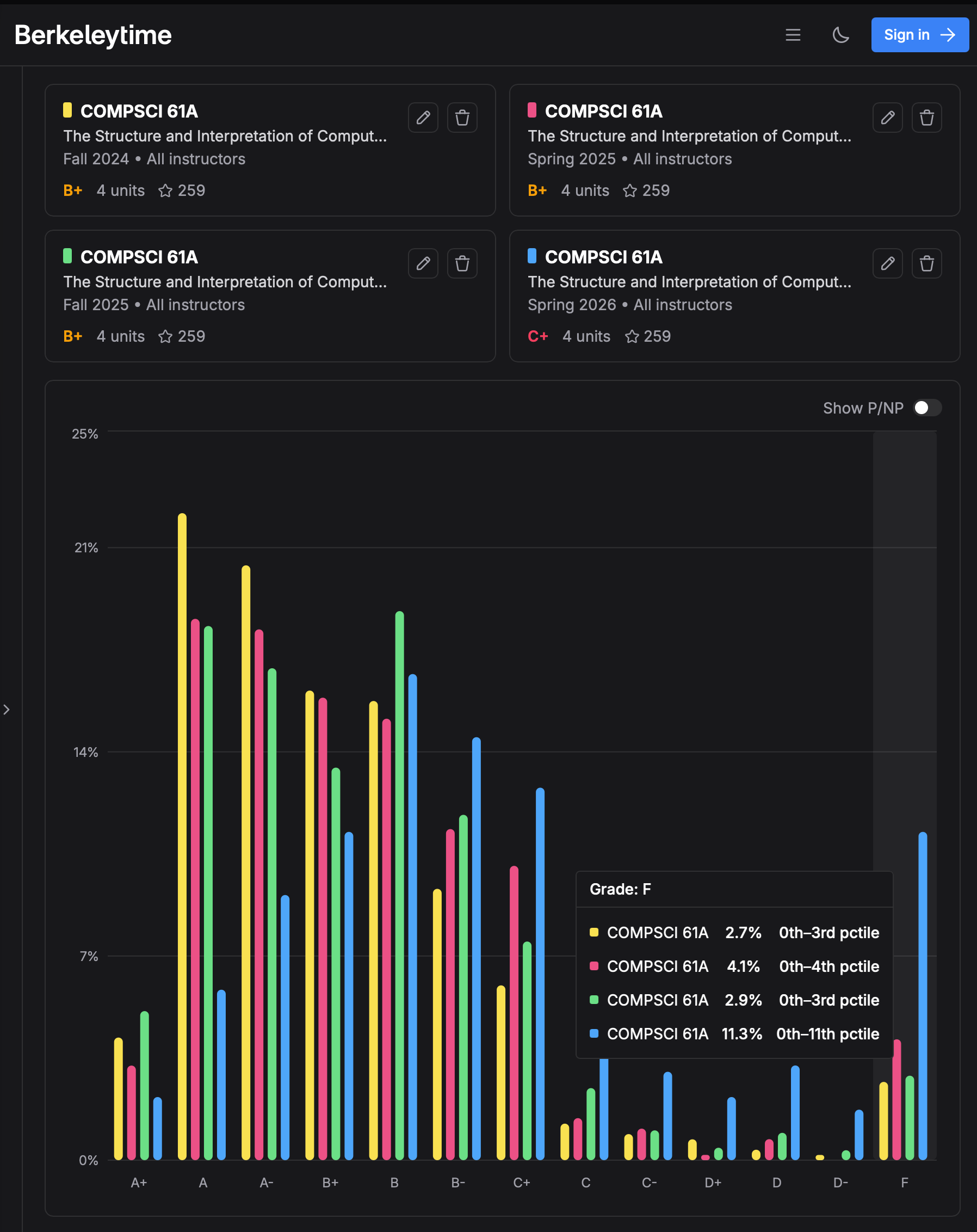
UC Berkeley teaching professor Dan Garcia taught both CS 10, “The Beauty and Joy of Computing,” and CS 61A, “The Structure and Interpretation of Computer Programs,” in spring 2026. Garcia believes the “primary driver” of these abnormally high failing rates is due to a “vast increase in academic dishonesty” due to students’ usage of large language models, such as Claude, ChatGPT and Google Gemini.
“Some of the numbers that you saw from the number of students who receive failing grades were because we caught them (cheating) and prosecuted them and are sending their cases to the center for student conduct,” Garcia said. “But in other cases, it’s students who are leaning a little too hard on LLMs to do their work for them, and then at exam time just really aren’t ready.”
[…]
Ranade and Garcia have both noticed the decline of student engagement in classes as well. Ranade said office hours used to be “overflowing,” but this semester, she and her TAs noticed “very low engagement” in office hours, despite frequently encouraging students to attend.
Garcia found a similar lack of attendance in his office hours over the past two semesters.
“I used to have full office hours, and for the first time, I was having nobody come to my office hours,” Garcia said. “It was just so surprising to sit in my office alone.”
When I attended CS 61A, one of my favorite things about the class was being able to visit Professor Clancy’s office hours. Getting to talk to him outside of lectures and building a personal connection with him was one of the bits that drove my interest into continuing learning more about computer science. I think it’s these experiences of having a mentor in a subject can make people feel like they are part of a community.
I was just a Berkeley Extension student, so I didn’t need to take more, but I think that experience was pivotal in encouraging me to go further and taking 61B and 61C and just continuously developing my interest in technology.
Both professors underscored the need for students to be more comfortable with difficult problems.
[…]
“I love this phrase my colleague uses: ‘Confusion is the sweat of learning.’ I just love that,” Garcia said. “A lot of students, I think, are not putting in the sweat.”